SECURITY AWARENESS TRAINING

Help your people recognise threats before they become incidents.

Valiant Systems Group provides practical cybersecurity awareness training and realistic phishing simulations designed to help employees recognise suspicious activity, make safer decisions and understand their role in protecting business information.
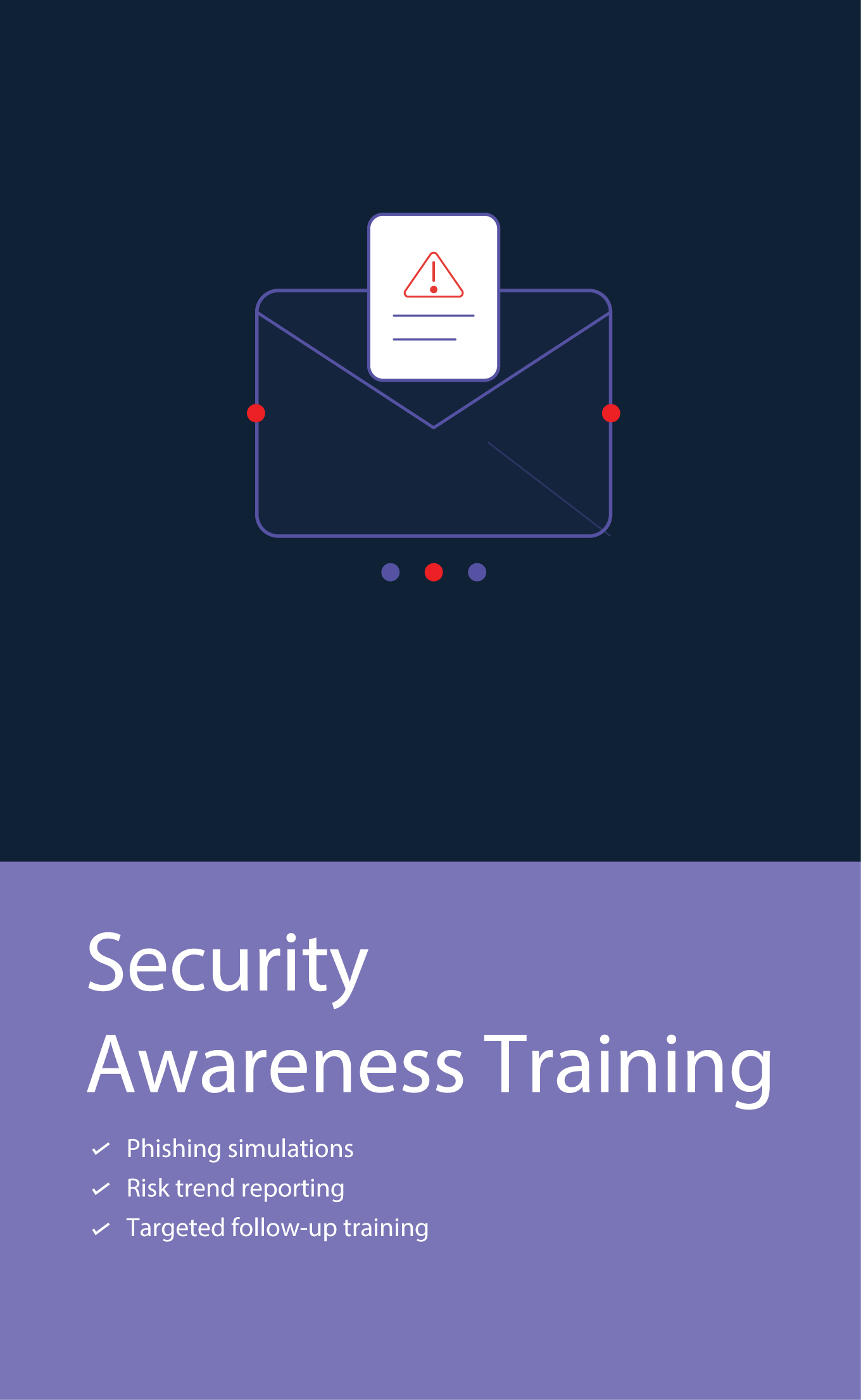
Practical training. Realistic simulations. Measurable improvement.
Secure by design. Driven by trust.

HUMAN-CENTRIC SECURITY

Cybersecurity is also a people challenge

Many cyber incidents begin simply—with an employee receiving a convincing email, opening a malicious attachment, following a fraudulent link, sharing sensitive information, or approving an unexpected authentication request. Technology alone cannot block every threat.
But employees should not be treated as the weakest link. With appropriate training, clear reporting processes, and regular positive reinforcement, your team can transform from targets into an active, resilient layer of your organization’s security controls.

Valiant Systems Group’s helps organizations build practical, lasting security habits without overwhelming employees with complex technical jargon or restrictive security barriers.

PROGRAM COVERAGE

The goal is not to catch employees out. It is to help them make safer decisions when real threats appear.
HUMAN RISK MANAGEMENT

Why employee awareness matters

Technical security controls are essential, but they cannot make every decision for the user. Employees still need to recognise unusual requests, protect sensitive information and report concerns quickly.

Phishing Recognition

Help users identify suspicious links, attachments, login pages and unexpected requests.

Account Protection

Improve understanding of passwords, multi-factor authentication and secure account behaviour.

Data Handling

Help employees understand how business and personal information should be stored, shared and protected.

Fraud Prevention

Increase awareness of impersonation, payment-redirection fraud and urgent financial requests.

Faster Reporting

Give employees a clear route for reporting suspicious messages, mistakes or possible incidents.

Security Culture

Reinforce the idea that cybersecurity is a shared business responsibility rather than only an IT task.
VSG METHODOLOGY

Training designed for real working environments

Awareness training should be short, relevant and easy to understand.

Core Cybersecurity Awareness

Introduce employees to common cyber risks and the practical actions they can take to reduce them.

Phishing and Email Security

Teach users how to assess suspicious senders, links, attachments, login requests and unusual instructions.

Password and MFA Awareness

Explain strong password practices, password managers, multi-factor authentication and account protection.

Data Protection and Privacy

Help employees understand appropriate handling of personal, confidential and commercially sensitive information.

Remote and Hybrid Working

Cover secure home working, public Wi-Fi, shared environments, business devices and remote access.

Social Engineering

Explain how attackers use urgency, authority, familiarity and emotion to influence decisions.

Mobile Device Security

Provide practical guidance on protecting phones, tablets, applications and business information.

Incident Reporting

Teach users how and when to report suspicious activity, mistakes, lost devices or possible data exposure.
THREAT REPORTING INTEGRATION

Make suspicious messages easy to report

Training is most effective when employees have a clear and simple way to report potential threats.

Reporting Process

Define how employees should report suspicious email, messages, calls or unusual system activity.

Email Reporting Tools

Support appropriate reporting tools within Microsoft Outlook or other supported email platforms where included.

Security Review

Allow submitted messages to be reviewed using the agreed support and security process.

User Feedback

Provide clear feedback so employees understand whether a message was malicious, suspicious or safe.

Incident Escalation

Escalate genuine threats through agreed technical and management contacts.

Trend Analysis

Use reporting trends to identify recurring threats and future training priorities.

Employees are more likely to report concerns when the process is simple, supportive and clearly communicated.

CONTINUOUS EDUCATION & COMPLIANCE

An Ongoing Awareness Programme

One annual training session is rarely enough to create lasting security habits. The programme should evolve as the organisation, workforce and threat landscape change.
PHASE 01

Onboarding Training

Introduce new employees to essential cybersecurity responsibilities and reporting processes.
PHASE 02

Core Annual Training

Provide structured baseline training covering common risks and expected behaviours.
PHASE 03

Regular Phishing Simulations

Reinforce learning through realistic and controlled scenarios.
PHASE 04

Short Refresher Content

Use concise modules, reminders and campaigns to keep important topics visible.
PHASE 05

Targeted Follow-up

Provide additional education following simulation results, emerging risks or identified knowledge gaps.
PHASE 06

Management Review

Review trends, participation and recommended improvements with authorised client contacts.
ROLE-BASED CURRICULUM

Relevant training for different responsibilities

Employees may face different risks depending on their role and level of access. Tailor your defense strategy accordingly.

All Employees

Managers

Finance Teams

HR Teams

IT & Administrators

Executive Leadership

Enterprise Cloud Safety

Awareness for Microsoft 365 & Modern Cloud Working

Many employees now work across Outlook, Teams, SharePoint, OneDrive and other cloud applications. Training should reflect how these tools are used in practice.

Outlook

Recognise phishing, suspicious attachments, unusual senders and fraudulent email requests.

Microsoft Teams

Identify suspicious links, unexpected files, external contacts and impersonation within collaboration tools.

SharePoint & OneDrive

Understand secure sharing, access permissions, external links and protection of business files.

Microsoft 365 Sign-In

Recognise fake login pages, unusual authentication prompts and suspicious consent requests.

Multi-Factor Auth (MFA)

Understand legitimate authentication prompts and how to respond to unexpected approval requests.

Copilot & AI Guidance

Provide guidance on responsible AI use, confidential information and verification of AI-generated content where relevant.
Clarification: Training content should reflect the client’s actual platforms, licences and working practices.
IDENTITY & ACCESS MANAGEMENT

Protecting accounts and identities

Compromised accounts can provide access to email, files, applications and sensitive information. Safeguarding your credentials is the business’s first line of defense.

Core Learning Outcome

Employees should understand that protecting their account also helps protect colleagues, clients and business information.
A single weak link compromises the entire collective perimeter. Security is a shared standard of operational excellence.

Core Training Modules

HUMAN RISK FACTORS

Recognising manipulation, not just malware

Attackers may use email, phone calls, text messages, social media, video calls or face-to-face conversations to influence employees.

1. Urgency

Requests designed to pressure users into acting without checking.

2. Authority

Messages pretending to come from executives, suppliers, banks or trusted organisations.

3. Familiarity

Messages that use known names, projects or relationships to appear genuine.

4. Fear

Warnings about account closure, legal action or security incidents.

5. Reward

Offers, refunds, prizes or opportunities used to encourage unsafe actions.

6. Secrecy

Requests instructing employees not to discuss or verify an unusual instruction.
SECURITY AWARENESS

Helping employees protect information

Awareness training can support the organisation’s wider privacy, information-security and data-handling responsibilities.

Personal data awareness

Confidential business information

Secure file sharing

Email recipient checks

Use of approved storage locations

Clear desk and screen security

Printing and disposal

Accidental disclosure

Reporting data incidents

Training can support the organisation’s data-protection and governance objectives, but it does not by itself guarantee compliance with UK GDPR, ICO guidance or other legal and contractual obligations.

SECURITY CULTURE

Build a supportive security culture

Employees should feel able to report errors and suspicious activity without fear of unfair blame.

1. KEEP IT PRACTICAL

Use examples employees are likely to encounter during normal work.

2. MAKE REPORTING SIMPLE

Provide a clear route for raising concerns quickly and securely.

3. REINFORCE REGULARLY

Use short and consistent reminders rather than relying only on annual training.

4. LEARN FROM MISTAKES

Use incidents and simulations to improve behaviour and adapt organizational processes.

5. LEAD FROM THE TOP

Encourage managers and senior leaders to participate actively and reinforce expectations.

6. RECOGNISE IMPROVEMENT

Highlight positive reporting and improving awareness without creating public league tables that embarrass employees.
INSIGHTS & ANALYTICS

Clear insight without unnecessary complexity

Reporting should be used to understand trends and target education, not simply to score or punish individual employees.

Core Simulation Performance

Phishing Reporting Rate
0 %
Phishing Simulation Interaction
0 %

Risk & Trend Intelligence

Actionable Analytics

Most Frequently Missed Topics: • Brand Impersonation Links • Urgent Authority Prompts

Recommended Next Actions

*Note: Available reporting metrics and features depend on the selected awareness platform, configuration, and agreed service scope.

POWERED BY TRUSTED TECHNOLOGY

Structured awareness training powered by trusted technology

Through Valiant Systems Group’s partnership with uSecure, eligible clients can access structured security-awareness content, phishing simulations, reporting and targeted follow-up training through a managed programme.

Short training modules

Bite-sized, interactive training sessions designed to keep employees engaged without taking up their workday.

Phishing simulations

Realistic, safe phishing templates that test employee vigilance against real-world social engineering.

User-risk insights

Deep, actionable analytics detailing user risks and identifying which divisions require closer support.

Automated training

Set-and-forget campaigns that deliver customized security modules to your teams automatically.

Follow-up education

Remedial learning is automatically dispatched to individuals who fall for simulated phishing hooks.

Management reporting

Clear, visual dashboards and exported compliance summaries ideal for presentation to leadership.

Policy acknowledgement

Host, distribute, and seamlessly track staff sign-offs on crucial cybersecurity and internal IT policies.

Ongoing administration

A fully managed service where VSG manages and refines the training program on your company’s behalf.
Ready to build an ironclad security culture within your workforce?
GOVERNANCE & ASSURANCE

Support wider governance and assurance objectives

Security awareness can provide evidence of employee education and help support wider control frameworks.

UK GDPR awareness

ICO-aligned data-handling expectations

Cyber Essentials preparation

Client and supplier requirements

Internal policies

Insurance requirements

Security questionnaires

Risk-management programmes

Staff policy acknowledgement

Governance reporting

Security awareness training can contribute to these objectives, but does not automatically make an organisation compliant or guarantee certification.

OUR METHODOLOGY

How VSG manages your awareness programme

A continuous, five-stage cycle designed to transform your employees into your strongest line of cyber defence.
STAGE 01

ASSESS

Understand the organisation’s users, working practices, existing training and priority risks.
STAGE 02

PLAN

Agree training topics, campaign frequency, reporting arrangements and employee communications.
STAGE 03

LAUNCH

Enrol users, introduce the programme and deliver initial awareness training.
STAGE 04

SIMULATE & EDUCATE

Run controlled phishing simulations and provide relevant follow-up education.
STAGE 05

REVIEW & IMPROVE

Review participation, reporting behaviour, risk trends and future priorities.

MEASURABLE OUTCOMES

What security awareness means for your organisation

Transform your workforce from your most vulnerable link into your strongest active defense layer. Our targeted strategy drives permanent behavioral changes.

MORE CONFIDENT EMPLOYEES

Help users make safer decisions when faced with unusual requests or suspicious activity.

IMPROVED PHISHING RECOGNITION

Increase familiarity with common phishing and social-engineering techniques.

FASTER REPORTING

Encourage employees to report concerns before they become larger security incidents.

REDUCED AVOIDABLE RISK

Improve everyday behaviours around accounts, email, critical business data and systems.

CLEARER VISIBILITY

Give management deep insight into training participation trends and recurring risk areas.

STRONGER SECURITY CULTURE

Make cybersecurity part of normal working practices rather than an annual administrative exercise.

TAILORED CYBERSECURITY EDUCATION

Awareness training that fits your organisation

Valiant Systems Group can provide managed security-awareness programmes, employee onboarding training, annual core training, regular phishing simulations, targeted follow-up education, role-based training, Microsoft 365 awareness, data-handling awareness, policy acknowledgement, management reporting, standalone awareness projects, and awareness alongside Valiant Systems Group managed cybersecurity services.

Managed Security-Awareness

Fully managed programs and comprehensive policy acknowledgment to drive long-term behavioral change.

Onboarding & Core Training

Structured onboarding pathways combined with annual core cyber-education to establish a solid baseline.

Phishing Simulations

Regular, highly-realistic phishing mock campaigns backed by targeted, instantaneous follow-up education.

Role-Based & Targeted

Specialized pathways crafted for executive, technical, administrative, and finance roles in your team.

M365 & Data Handling

Deep dives into Microsoft 365 environments, securing modern clouds, and compliant data-handling workflows.

Integrated or Standalone

Available as standalone awareness campaigns or fully unified with VSG Managed Cybersecurity Services.

Platform features, training frequency, user quantities, campaign schedules, reporting and follow-up activities depend on the selected service package and agreement.

FAQ & SUPPORT

Frequently Asked Questions

Everything you need to know about Valiant Systems Group’s training platform, phishing simulations, compliance standards, and managed program support.

Still have questions?

Speak directly with a VSG security awareness expert to tailor a curriculum to your threat landscape.

What is cybersecurity awareness training?

Cybersecurity awareness training is an educational program designed to help employees recognize security risks, avoid falling victim to online scams, and build safe digital habits to protect organizational assets.
We recommend continuous, monthly bite-sized training. Bite-sized modules keep cybersecurity top-of-mind without disrupting daily workloads or causing training fatigue.
A phishing simulation is a controlled mock cyberattack mimicking real phishing emails. It lets you safely measure employee response rates and identify who needs additional, supportive guidance.
No. To obtain realistic vulnerability metrics, simulations run unannounced in the background. Rest assured, our simulations focus strictly on positive education rather than setting traps.
Absolutely not. Our approach is purely educational. If an employee clicks on a simulation, they receive immediate, constructive micro-learning designed to help them spot the red flags next time.
Yes. Training and mock attacks can be tailored to match the unique threats different departments encounter, such as targeted invoice fraud simulations for your accounts team.
Yes. We support active directory integrations (such as Microsoft Entra ID) to automatically sync and enroll new joiners into baseline training campaigns from day one.
Yes. Our platform offers targeted modules focusing on Microsoft 365 credential theft, SharePoint file sharing risks, and malicious Teams requests to protect your primary workspace.
Yes, completely. Delivering continuous training directly satisfies security awareness mandates under UK GDPR accountability guidelines and actively supports your Cyber Essentials goals.
Managers receive aggregate dashboard reporting showing course completion percentages, click-through averages on simulations, and overall organizational risk reductions over time.
They are immediately presented with a warm, encouraging landing page that points out the specific cues they missed, using the moment as a highly effective learning experience.
Yes! Our Fully Managed Service covers everything from custom campaign structures and phishing design to monthly reporting, giving you expert security oversight with zero admin friction.

VSG delivers dependable IT and security services designed for real-world businesses. We reduce risk, improve performance, and give you peace of mind with support you can trust.

Registered in the United Kingdom and Wales

Company Number: 16072925

D-U-N-S Number: 232653775